
When comparing family practice vs internal medicine, the main difference is who they are trained to care for and how their training is focused. Both are primary care specialties that help with preventive care, routine checkups, common illnesses, and ongoing health concerns. In simple terms, family physicians often care for children, teens, and adults, while internists focus on adult patients.
The right choice depends on your age, health history, whether you want one clinician for the whole family, and whether you need support managing adult chronic conditions over time. Neither option is automatically better for everyone. Instead, the best fit usually comes down to your personal care needs and preferences.
This overview is educational and not a diagnosis. For non-emergency questions, telemedicine may also help with some primary care concerns, depending on the situation and the type of care you need.
What Family Practice and Internal Medicine Mean
Family practice, often called family medicine, is a type of primary care that may serve patients across many life stages. A family medicine physician may care for infants, children, teens, adults, and older adults, which makes this specialty a practical option for households that want broad, ongoing care in one setting. Family medicine specialists often provide routine checkups, preventive visits, vaccinations, treatment for common illnesses, and support for chronic condition management depending on the patient’s needs.
What family practice covers
Because family practice spans a wide age range, it often emphasizes continuity and convenience. A primary care physician in family medicine may help with wellness care, minor acute concerns, follow-up visits, and long-term health monitoring over time. Some patients choose family medicine because it may allow multiple family members to receive care through the same clinic, while still addressing everyday health concerns within the doctor’s scope.
What internal medicine covers
Internal medicine is also primary care, but it focuses on adults rather than children. An internal medicine physician often provides preventive care, annual exams, diagnosis of common adult illnesses, and management of ongoing conditions such as high blood pressure, diabetes, or cholesterol concerns. In discussions about internal vs family medicine, this adult-focused training is one of the clearest differences. Internal medicine doctors may also be especially involved when an adult patient has several health issues that need coordinated monitoring.
Both specialties may handle routine care, prevention, common illnesses, and chronic disease management within their training and scope. Depending on the condition, either type of primary care physician may also recommend specialist evaluation, imaging, urgent treatment, or hospital-based care. If you want more context on what a medical doctor does, that can help place both specialties within the larger picture of primary care.

Key Differences Between Family Practice and Internal Medicine
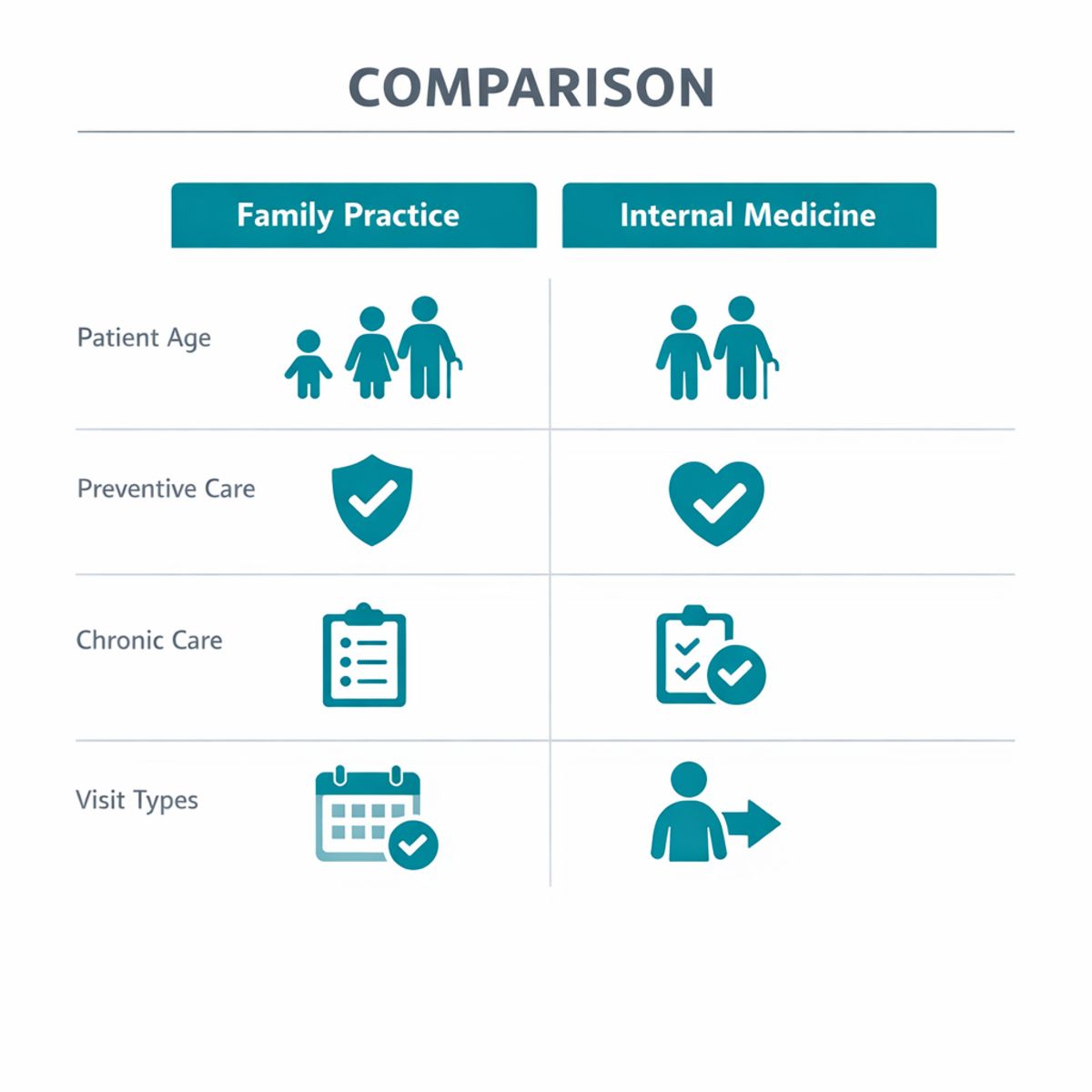
When comparing family practice and internal medicine, the biggest difference is who they treat and how their training is focused. Both are primary care specialties, and both can help with preventive care, common illnesses, medication management, and ongoing health concerns. In an internal vs family medicine comparison, the best fit often depends on your age, your household needs, and whether you want broad all-ages care or adult-focused care.
In many cases, either type of physician may also recommend telemedicine visits for non-emergency care when appropriate, which can make follow-up and routine concerns more convenient.
Who they treat
Family practice typically cares for patients across many life stages, including children, teens, adults, and older adults. That makes it a practical option for households that prefer one primary care setting for multiple family members. Internal medicine, by contrast, focuses on adults. This can appeal to patients who want care centered specifically on adult health needs, including concerns that become more common with age.
How their training focus differs
Family practice training emphasizes broad primary care across age groups and everyday health needs over time. Internal medicine training emphasizes adult medicine more deeply, especially the evaluation and long-term management of adult conditions. That does not mean one specialty is always better than the other. It means the training lens is different: one is broader across life stages, while the other is more concentrated on adult-specific care.
What kinds of visits they often handle
Both specialties commonly handle annual wellness visits, sick visits for routine illnesses, medication refills, preventive screenings, and follow-up appointments. Family practice may be especially convenient when several members of a household need care in the same practice. Internal medicine may feel like a closer fit for adults who want care focused on blood pressure, cholesterol, diabetes, thyroid concerns, or other ongoing adult health issues within the primary care setting.
A simple way to think about family practice and internal medicine is this: family practice often offers convenience and continuity across ages, while internal medicine offers adult-centered primary care with strong attention to chronic disease management. Individual physician experience, communication style, and practice approach also matter, so the right choice is often the doctor whose scope and style best match your needs.
Which Doctor May Be the Better Fit for You

Choosing between a family medicine clinic and an internal medicine clinic often depends on your stage of life, household needs, and the kind of ongoing care you expect to use most. In many cases, either option may be appropriate, but the better fit can come down to whether you want care for multiple age groups in one place or adult-focused care that centers on common health concerns in adulthood.
It may also help to think beyond the specialty name alone. A physician’s communication style, appointment approach, office availability, and overall care model can all shape your experience. Before scheduling, it is wise to confirm insurance participation, services offered, and whether the office currently meets your practical needs.
When family practice may make sense
A family practice may appeal to households that want one primary care home for different ages. Parents sometimes prefer the convenience of bringing children, teens, and adults to the same general practice, especially when they value continuity across the family. This can also be appealing for multigenerational households that want a more unified care experience over time.
For relatively healthy adults who like the idea of a broader family-centered setting, a family medicine clinic may feel like a practical choice. That does not mean it is automatically the best option for every family, but it may be worth considering if convenience, familiarity, and long-term relationship building across age groups are high priorities.
When internal medicine may make sense
An internal medicine clinic may be especially appealing for adults who want care focused specifically on adult health patterns. This can be a reasonable option for younger and middle-aged adults as well as older adults, particularly if they prefer a physician whose practice is centered on adult preventive care, symptom evaluation, and follow-up for ongoing concerns.
Internal medicine may also stand out for adults managing multiple long-term health issues, such as blood pressure, cholesterol, diabetes, or other ongoing conditions that require regular monitoring. That does not mean every adult with chronic concerns should choose internal medicine, but some patients may prefer an adult-focused approach when their care needs become more complex.
If you are deciding between the two, it may help to ask practical questions: Do you want one office for the whole family? Are you mainly seeking adult-focused care? How easy is it to get routine follow-up? Is your insurance accepted, and are the services you need available? Looking at these everyday factors can make the choice feel clearer and more personal to your situation.
How to Choose Between Family Practice and Internal Medicine
If you are deciding between family practice and internal medicine, it helps to use a simple process instead of guessing. The right fit often depends on who needs care, your health history, how you prefer to access care, and practical details like insurance and scheduling. These steps can help you narrow your choice and prepare for a more informed first appointment.
1. Assess who needs care
Start by thinking about whether you are choosing a doctor for yourself alone or for multiple people in your household. If you want one practice that may care for children, adults, and older family members, that may shape your decision. If the choice is only for one adult, your age, current concerns, and long-term care goals may matter more than household convenience.
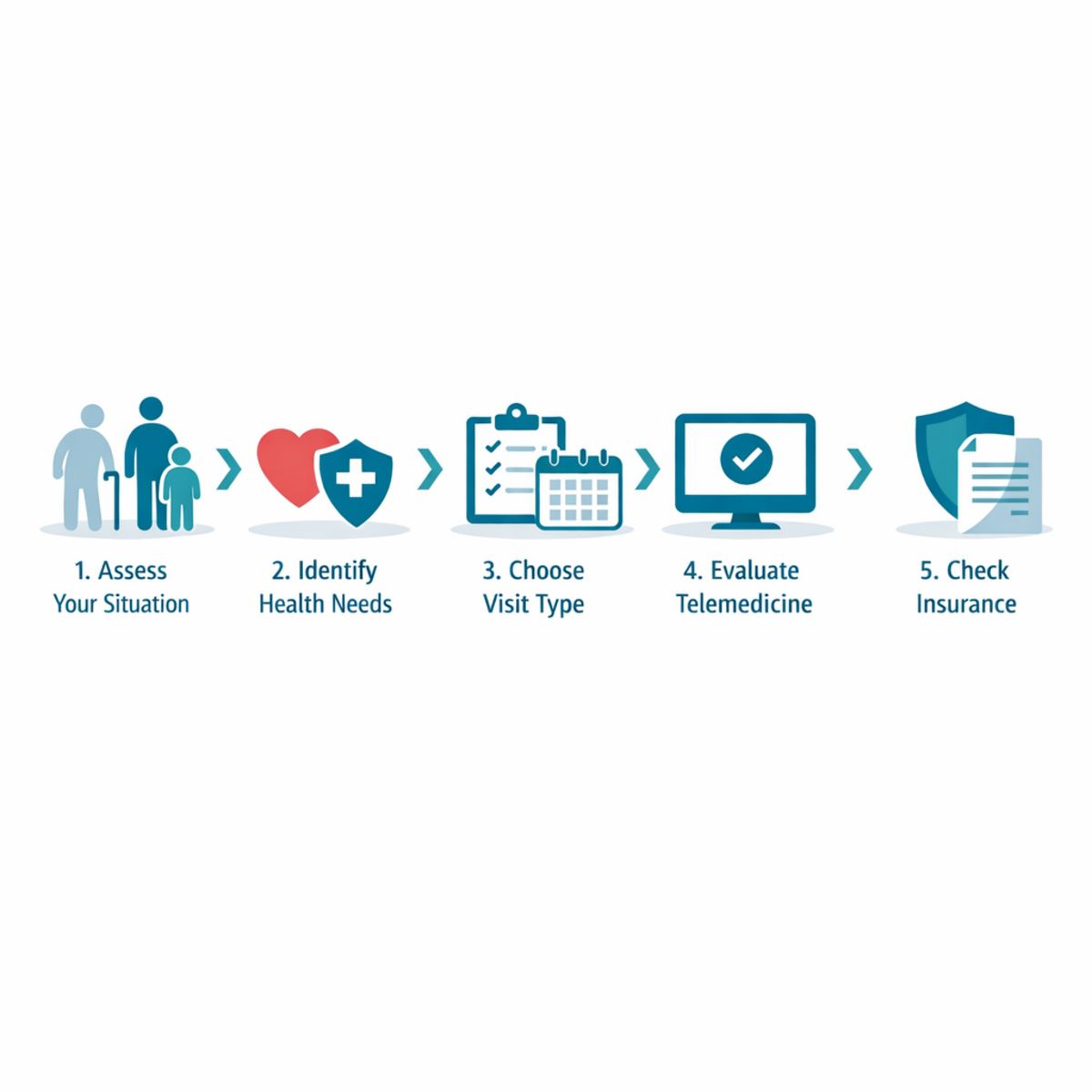
2. Review your health history
Next, look at your health needs without trying to diagnose yourself. Consider your age, medications, preventive care needs, and whether you already manage ongoing conditions such as high blood pressure, diabetes, or high cholesterol. If you expect regular follow-up for adult chronic care, that may influence which type of primary care physician feels like the best fit. If your needs are broader or may change over time, that is also worth considering.
3. Consider visit format and convenience
Think about how you want to access care. Office location, appointment availability, and communication style can make a real difference. For some non-emergency concerns, follow-ups, or medication-related discussions, virtual care may be useful. It can help to learn more about when telemedicine may help. At the same time, some symptoms require in-person evaluation, specialist care, urgent care, or hospital-level treatment depending on a physician’s assessment.
4. Check logistics before booking
Before you schedule, confirm the basics. Check whether the practice accepts your insurance, whether it is taking new patients, and how long new-patient appointments typically take to arrange. You may also want to ask about office hours, telemedicine availability for appropriate concerns, prescription refill processes, and how the office handles messages or test results. These details can affect your experience just as much as the provider type.
5. Prepare for your first visit
Once you choose a practice, make your first visit more productive by preparing a short list of questions. Ask about preventive services, chronic condition follow-up, medication management, and what kinds of concerns the doctor typically handles directly. You can also ask when referrals are recommended and when an in-person visit is preferred over virtual care. A few thoughtful questions can help you decide whether the practice matches your needs now and in the future.
Where Telemedicine Fits Into Primary Care Decisions
Telemedicine can be a helpful option for some non-emergency primary care questions, especially when you need guidance, a follow-up conversation, or a discussion about medications and next steps. For many patients, virtual care offers a convenient way to talk with a physician without assuming that every concern requires an office visit. If you are exploring telemedicine visit options with House Call Doctor LA, it can help to think of telemedicine as one format of care rather than a replacement for all in-person care.
When telemedicine may help
Virtual visits may be appropriate for certain primary care needs such as follow-up check-ins, medication discussions, reviewing ongoing symptoms, and getting care navigation about what kind of evaluation may be needed next. In some cases, a physician may be able to address your concern remotely; in others, the visit may help determine whether an in-person appointment, testing, or referral makes more sense. Appropriateness depends on the patient, the concern, and the physician’s evaluation.
When virtual care may not be enough
Telemedicine is different from an in-home physician visit, and it is not always sufficient on its own. Some conditions require a hands-on exam, vital signs, imaging, lab work, specialist care, or hospital-level treatment. Telemedicine is also not a substitute for 911 or the emergency room in a life-threatening emergency. When symptoms are severe, rapidly worsening, or potentially urgent, the safest next step may be immediate in-person care.

Frequently Asked Questions
Common questions patients ask
Is family practice the same as internal medicine?
Not exactly. Both provide primary care, but family practice treats patients across many age groups, including children and adults. Internal medicine focuses on adult care. They overlap in prevention, routine visits, and chronic disease management, but their training scope is different.
Should adults choose a family doctor or an internist?
It depends on your needs and preferences. A family doctor may be a good fit if you want one clinician for multiple family members. An internist may appeal if you want care focused specifically on adult health concerns, including complex or multiple medical conditions.
Can a family practice doctor treat chronic conditions?
Yes, family practice doctors commonly help manage chronic conditions such as high blood pressure, diabetes, asthma, and high cholesterol. They also coordinate preventive care, monitor symptoms over time, and refer to specialists when a condition needs more advanced evaluation or treatment.
Does internal medicine include preventive care?
Yes. Internal medicine includes preventive care such as annual wellness visits, screenings, vaccinations, and counseling about lifestyle habits. Internists also look for risk factors that may affect long-term health, while helping adults stay current with recommended routine care.
Can telemedicine help with primary care questions?
Often, yes. Telemedicine can be useful for medication follow-ups, reviewing symptoms, discussing test results, and getting guidance on next steps. It may be less appropriate when a hands-on exam, urgent testing, or in-person treatment is needed, so the right option depends on the situation.
Need Help Deciding What Kind of Primary Care Visit Makes Sense?
If you are unsure which type of primary care visit may fit your non-emergency concern, House Call Doctor LA can help you understand your options. Telemedicine may be appropriate in some situations, but suitability depends on your condition and a physician’s evaluation. You can also ask about available visit types and verify insurance coverage before scheduling.
Final Takeaway
In general, family practice cares for patients across all ages, while internal medicine focuses on adults, and the right fit depends on your personal health needs, your household’s care needs, and whether options like telemedicine suit appropriate non-emergency concerns.