
The cardiac conduction system is the heart’s built-in electrical network. In simple terms, it creates and carries the signals that tell the heart when to beat, helping the upper and lower chambers contract in the right order. That timing matters because the heart does more than squeeze hard—it also has to squeeze at the right moment to move blood efficiently through the body.
When this electrical signaling works smoothly, it supports a steady rhythm and effective pumping. When it is disrupted, the heart rate may become too fast, too slow, or irregular, and the heart may not pump as efficiently as it should. This article is designed to explain the basics in clear, practical language, including how the system works, what can affect it, and which warning signs deserve prompt attention.
This is educational information, not a diagnosis. While many rhythm-related symptoms can have different causes, some situations should never wait. If someone has chest pain, collapses, is unresponsive, or has severe shortness of breath, seek emergency care right away.
Why the heart’s electrical system matters
A helpful way to think about it is that the heart needs both power and timing. The muscle provides the force, but the electrical system acts like the timing signal that keeps each beat coordinated. Without accurate timing, even a strong heart muscle may not move blood as effectively as it should.
What the Cardiac Conduction System Is
The cardiac conduction system is the heart’s built-in electrical pathway that starts each heartbeat and directs it in an organized sequence. Instead of the chambers squeezing at random, this system creates a timed signal that moves from the upper chambers to the lower chambers so the heart can fill and pump efficiently. In simple terms, it is the wiring that helps turn an electrical impulse into a coordinated heartbeat.
The process usually begins in the sinoatrial, or SA, node, a small group of specialized cells in the right atrium. The SA node is often called the heart’s natural pacemaker because it normally generates the first electrical signal for each beat. That signal spreads across the atria, causing them to contract and push blood into the ventricles.
The SA node and AV node
After the signal moves through the atria, it reaches the atrioventricular, or AV, node. The AV node acts like a gatekeeper. It briefly slows the signal before sending it onward. This short delay is important because it gives the ventricles a moment to finish filling with blood before they contract. Without that pause, the pumping sequence would be less efficient.
This top-to-bottom timing is a key part of how normal rhythm is maintained. It is also where cardiac electrophysiology becomes relevant, because that field studies how these electrical signals start, travel, and sometimes become disrupted.
Bundle branches and Purkinje fibers
From the AV node, the impulse travels into the bundle of His, which carries the signal into the wall between the ventricles. The pathway then divides into the right and left bundle branches, sending the signal down each side of the heart. Finally, the impulse spreads through the Purkinje fibers, a network of specialized fibers that distribute the signal through the ventricular muscle.
This rapid spread helps both ventricles contract in a coordinated way, which is what produces an effective heartbeat and moves blood to the lungs and the rest of the body. When you picture the pathway from signal generation to ventricular contraction, think of it as a step-by-step relay: the SA node starts the beat, the AV node times it, and the lower pathways deliver it so the ventricles squeeze together.

How a Heartbeat Happens Step by Step
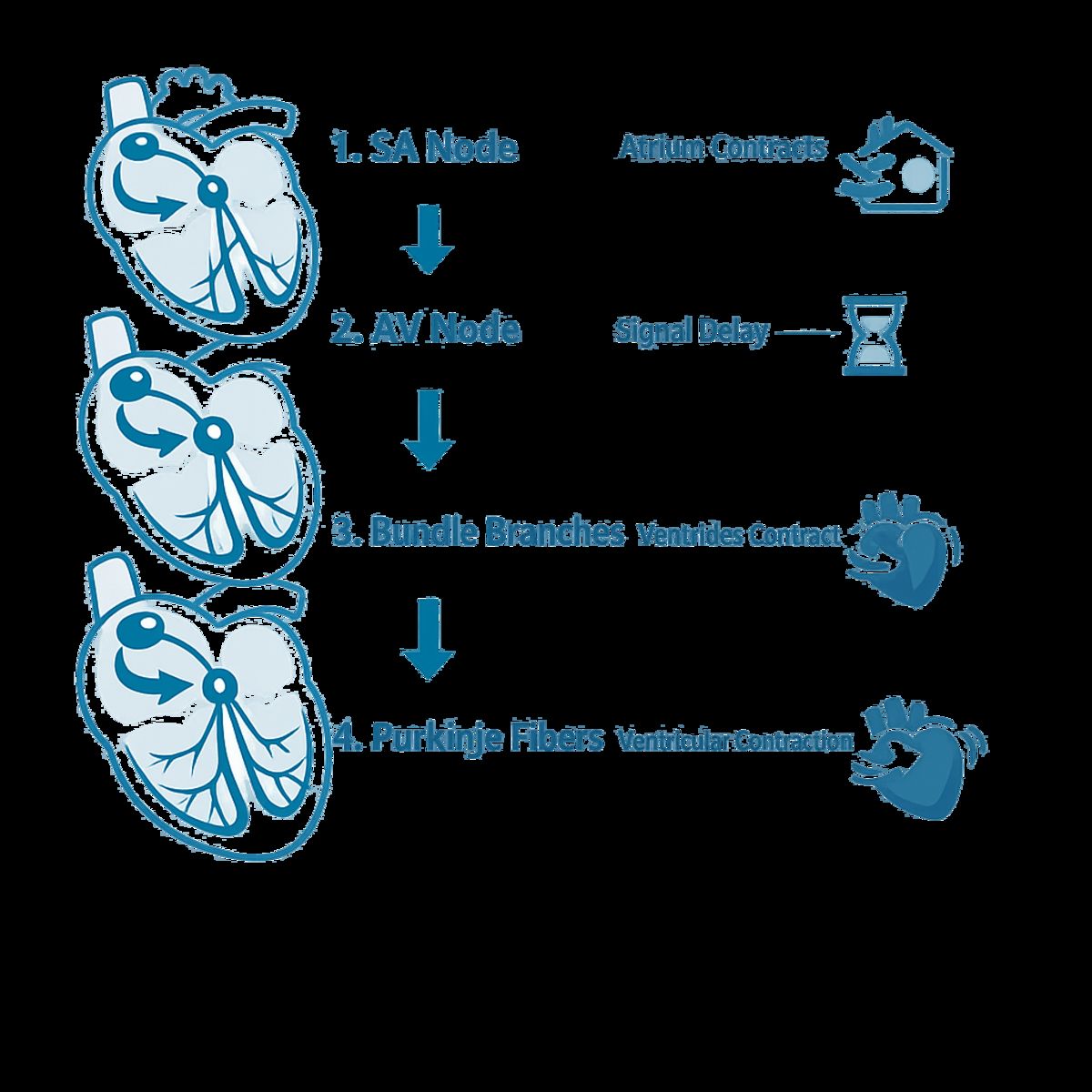
A normal heartbeat follows a repeatable sequence. First comes the electrical signal, then the muscle response, and finally the movement of blood. This timing matters because well-coordinated activation helps the heart pump efficiently and supports normal cardiac output, which can vary based on the person, activity level, and overall health situation.
1. The heartbeat starts in the SA node. The sinoatrial, or SA, node is often called the heart’s natural pacemaker. It creates the first electrical impulse. That signal spreads across the atria, the two upper chambers, causing them to contract and push blood into the ventricles below.
2. The signal pauses briefly at the AV node. After moving through the atria, the impulse reaches the atrioventricular, or AV, node. This short delay is important. It gives the ventricles time to finish filling before they contract. Without that pause, the pumping sequence would be less efficient.
3. The ventricles activate rapidly. From the AV node, the signal travels through specialized pathways in the bundle of His, bundle branches, and Purkinje fibers. This spreads the impulse quickly through the ventricles so they contract in a coordinated way. That contraction pushes blood out of the heart: the right ventricle sends blood to the lungs, and the left ventricle sends blood to the body.
From electrical signal to pumping action
The key idea is cause and effect: electrical activation tells heart muscle cells when to contract. When the atria activate, they squeeze first. When the ventricles activate, they create the stronger pumping phase that moves blood forward. Good timing between these steps helps maintain effective circulation and contributes to normal cardiac output.
4. The heart resets for the next beat. After contraction, heart cells recover so they can be activated again. This recovery phase prepares the tissue for the next impulse and keeps the rhythm moving in an organized cycle rather than a constant, uncoordinated squeeze.
A simple way to think about cardiac action potential
A cardiac action potential is the electrical change that allows a heart cell to turn on and then reset. In simple terms, depolarization is the “on” phase that triggers activation, and repolarization is the “reset” phase that gets the cell ready for the next beat. Every normal heartbeat depends on this pattern happening in the right place at the right time.
When readers remember the sequence, it becomes easier to understand the whole process: start the signal, pause for filling, contract the ventricles, then recover. That organized pattern is what turns electrical activity into effective pumping.
Why Coordinated Conduction Matters for Heart Function
A well-coordinated conduction system helps the heart beat in an organized sequence, which supports efficient filling and pumping. In simple terms, the upper chambers need time to move blood into the lower chambers before the lower chambers contract and send blood forward. When that timing is working smoothly, circulation is often more effective and daily activity may feel easier.
Timing, rhythm, and blood flow
If electrical signals are delayed, too fast, too slow, or irregular, the heart may not pump as efficiently as it could. Depending on the situation, that change in timing may contribute to symptoms such as palpitations, dizziness, fatigue, or reduced exercise tolerance. Some people notice these changes clearly, while others may have few or no symptoms at all. That is one reason rhythm-related concerns can feel noticeable even when the underlying causes vary from person to person.
It is also important to keep symptoms in context. Feeling a skipped beat, fluttering, or low energy does not by itself confirm a specific diagnosis. Similar symptoms can happen for many reasons, and the meaning depends on the full clinical picture, including medical history, exam findings, and sometimes heart rhythm testing. For readers who want more background on team-based heart care, this overview of what a cardiac nurse does may be helpful.
Overall, coordinated conduction matters because small differences in timing can affect how well the heart supports the rest of the body. Understanding that connection can make symptoms easier to discuss with a clinician, without assuming any one symptom points to a single cause.
Cardiac Arrest vs Heart Attack: Why the Difference Matters
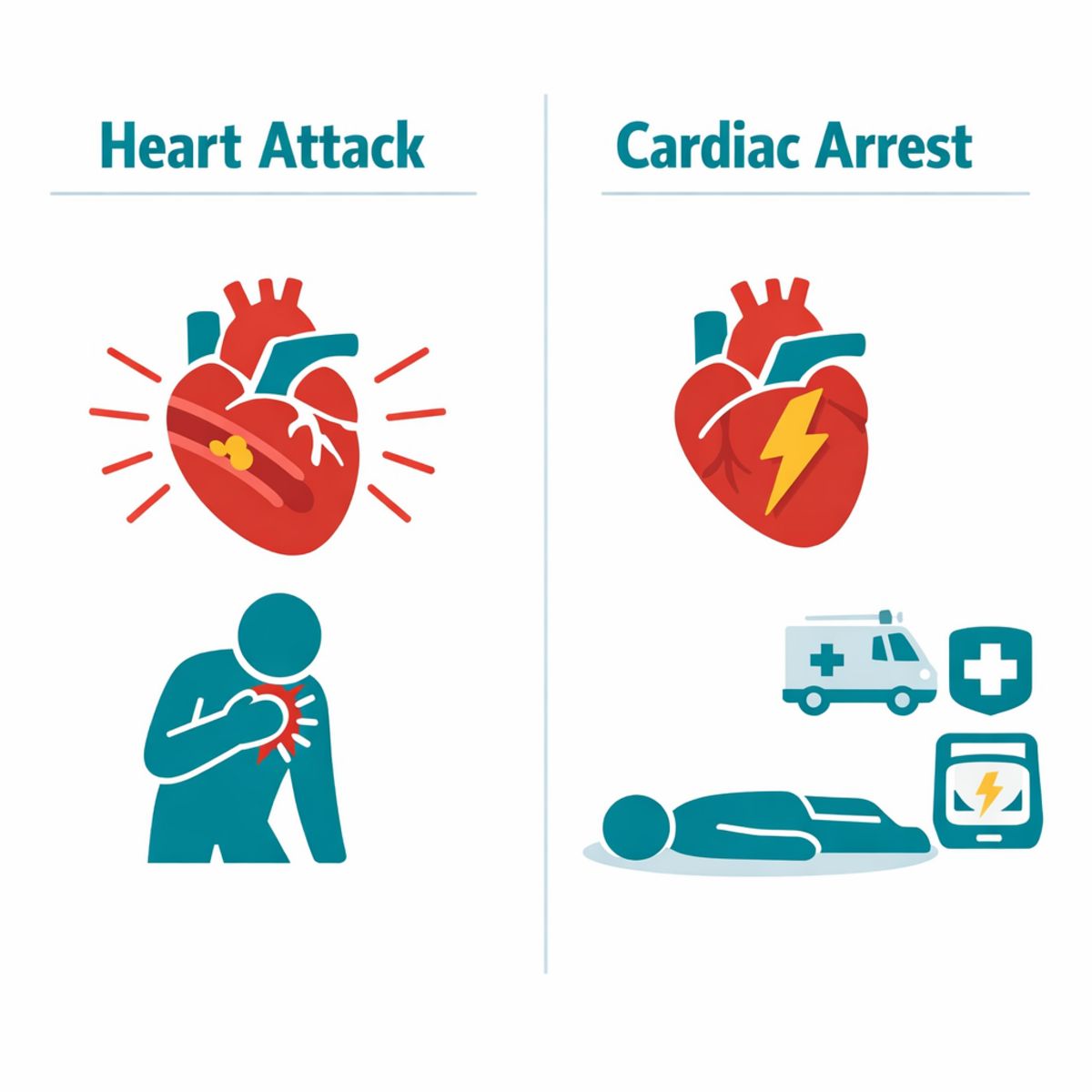
Understanding cardiac arrest vs heart attack can help people respond more appropriately in an emergency. Although both involve the heart, they are not the same thing. A heart attack usually happens when blood flow to part of the heart muscle is blocked. Cardiac arrest is different: it is a sudden loss of effective heart function, which means the heart can no longer pump blood well enough to support consciousness and normal breathing.
In simple terms, a heart attack is mainly a circulation problem, while cardiac arrest is mainly an electrical problem. That distinction matters because a person in cardiac arrest may collapse, become unresponsive, and stop breathing normally within moments. A heart attack may or may not lead to that kind of immediate collapse. Some heart attacks can trigger dangerous rhythm problems that then cause cardiac arrest, but the terms are not interchangeable.
What causes cardiac arrest?
When people ask what causes cardiac arrest, the answer is broad. It can result from dangerous arrhythmias, severe underlying heart disease, major trauma, lack of oxygen, drug toxicity, or other critical medical events. In some cases, it may follow a heart attack, but it can also happen for reasons that are not related to a blocked artery. Because the causes vary, emergency evaluation is essential rather than trying to determine the reason on your own in the moment.
Why these terms are often confused
These terms are often confused because both conditions involve the heart and both can be life-threatening. But they affect the body in different ways. A heart attack damages heart muscle by reducing blood supply. Cardiac arrest stops effective circulation to the brain and other organs because the heart is no longer pumping properly. That is why the response to collapse, unresponsiveness, or absent normal breathing must be immediate.
If someone suddenly collapses, is unresponsive, or is not breathing normally, treat it as an emergency and call 911 or go to the nearest emergency room right away. Fast action can make a critical difference.
How to Respond When Heart Rhythm Symptoms Raise Concern

If you notice symptoms that may be related to heart rhythm changes, the safest first step is to judge how urgent the situation feels. This section is not a diagnosis, but it may help you decide when emergency care is needed and when a non-emergency medical evaluation may be appropriate depending on your condition.
Know the emergency red flags
Call 911 or go to the nearest emergency room right away for collapse, unresponsiveness, severe chest pain, severe shortness of breath, or any symptom that feels life-threatening. Emergency services are also the right choice if symptoms are rapidly worsening or you cannot safely wait for an outpatient opinion. Home-based care or virtual care should not replace emergency services in these situations.
If symptoms are not severe but still concerning, such as intermittent palpitations, mild dizziness, or questions about what you are feeling, seek physician evaluation subject to clinical judgment. In some cases, reviewing urgent care or ER guidance may help you think through the next step, but worsening symptoms should always be taken seriously.
Prepare for a medical evaluation
Before your visit, gather a few details that may help a clinician assess the situation. Note when the symptoms started, how long they lasted, what you were doing at the time, and whether anything seemed to trigger or relieve them. It may also help to write down associated symptoms, current medications, caffeine or alcohol use, recent illness, and any personal or family history that seems relevant.
Then ask what type of care is most appropriate for your situation. Depending on the symptoms and your medical history, a physician may recommend an in-home evaluation, office visit, telemedicine for non-emergency symptom review, specialist referral, or hospital-based care. The key is matching the level of care to the level of concern while keeping clear safety boundaries in place.
How Doctors Evaluate Possible Conduction or Rhythm Concerns
When questions come up about possible heart conduction or rhythm concerns, the next step is usually a careful medical review rather than jumping straight to one test. Doctors often begin by asking about symptoms, when they happen, how long they last, what medications or supplements you take, and whether there is any relevant personal or family history. A physical exam may also help provide context.
Common tools used in evaluation
One common tool is an ECG or EKG, which records the heart’s electrical activity at a specific moment in time. Depending on the situation, a clinician may also review blood pressure, oxygen levels, recent illness, hydration status, and medication effects. If more information is needed, the next step may include referral for additional testing or specialist evaluation.
Some concerns can be discussed virtually first, especially when the goal is to review symptoms, history, or medications. Others may require in-person testing, urgent evaluation, or hospital-based care. The right plan depends on the symptoms involved, the patient’s overall health, and what the initial assessment suggests.
Because testing needs and treatment plans vary, it can help to keep records of symptoms and prior care. If documentation is part of the process, this letter of medical necessity guide may also be useful for understanding related paperwork.
Frequently Asked Questions
What is the cardiac conduction system?
The cardiac conduction system is the heart’s electrical network that helps coordinate each heartbeat. It generates and carries signals that tell the heart muscle when to contract. This is educational information and not a diagnosis of any specific rhythm condition.
What does the SA node do?
The SA node is the heart’s usual natural pacemaker. It normally starts the electrical signal that sets the rhythm for each beat. Other parts of the conduction system then help carry that signal through the heart.
How is the cardiac conduction system related to cardiac electrophysiology?
Cardiac electrophysiology is the study of how the heart’s electrical signals are generated and conducted. The cardiac conduction system is the pathway those signals follow. In simple terms, electrophysiology focuses on how the electrical system works and what may happen when it does not work normally.
Can conduction problems affect normal cardiac output?
Yes, conduction problems can affect normal cardiac output because the timing of the heartbeat helps determine how efficiently the heart pumps blood. If the chambers beat too slowly, too quickly, or out of sync, pumping may be less effective. The impact varies by the cause, severity, and the individual patient.
What are some possible signs of cardiac arrest?
Possible signs of cardiac arrest include sudden collapse, unresponsiveness, and absent normal breathing. Cardiac arrest is a medical emergency that requires calling 911 right away and starting emergency response if trained to do so. Do not rely on online information to confirm or rule out an emergency.
What is the difference between cardiac arrest vs heart attack?
Cardiac arrest is primarily an electrical failure that causes the heart to stop pumping effectively, while a heart attack usually happens when blood flow to part of the heart muscle is blocked. A heart attack can sometimes lead to cardiac arrest, but they are not the same event. Both need urgent medical attention.
Can telemedicine help with heart rhythm questions?
Telemedicine may help with non-emergency heart rhythm questions, education, or follow-up, depending on the situation. It can be useful for discussing symptoms, test results, or next steps, but it does not replace emergency care. If someone has severe symptoms, collapse, chest pain, or trouble breathing, seek immediate in-person emergency care.
When to Contact House Call Doctor LA
If you have non-emergency heart-related questions, new symptoms that are not severe, or want a physician to review your concerns, you can contact House Call Doctor LA to request an appointment. The most appropriate care setting depends on your condition, symptoms, and physician evaluation. In some cases, an in-home visit may be appropriate, while others may be better suited for telemedicine visit options with House Call Doctor LA.
In-home or virtual care, depending on your needs
Some concerns may be addressed through an in-home physician visit or virtual care, while others may require specialist evaluation or hospital-based treatment. If you are experiencing chest pain, trouble breathing, fainting, or other emergency warning signs, call 911 or go to the nearest emergency room.
Key Takeaways
The cardiac conduction system is the heart’s electrical timing network, helping each heartbeat happen in an organized, coordinated way. When that timing is disrupted, symptoms such as palpitations, dizziness, chest discomfort, or fainting deserve proper medical evaluation rather than guesswork.
A simple takeaway: understand the basics, pay attention to warning signs, and seek the right level of care. If symptoms are severe, sudden, or include chest pain, trouble breathing, or loss of consciousness, seek emergency help right away.