A cardiac nurse is a nurse who focuses on caring for people with heart-related conditions and concerns. They may help patients in clinics, hospitals, recovery settings, and other care environments before, during, and after cardiac procedures. For readers trying to understand this role, the main benefit is simple: knowing what a cardiac nurse does can make heart care feel less confusing and help you know what kind of support may be involved.
Cardiac nurses often work as part of a larger medical team, helping monitor symptoms, explain care plans, support recovery, and respond to changes that need medical attention. Because heart symptoms can vary from person to person, proper medical evaluation is important. In-home care and Telemedicine can be helpful in some situations, but they are not a substitute for emergency services.
If someone has possible life-threatening symptoms such as collapse, unresponsiveness, severe chest distress, or serious trouble breathing, call 911 or go to the nearest emergency room right away.
What this guide covers
This guide gives a clear overview of the cardiac nurse role, including where cardiac nurses work, the skills they use, the types of procedures and patient support they may be involved in, common warning signs that should be medically assessed, and when professional care may help.
What Is a Cardiac Nurse?
A cardiac nurse is a registered nurse or advanced practice nurse who focuses on caring for people with heart and circulation concerns. In simple terms, cardiac nursing centers on helping patients before, during, and after treatment for heart-related symptoms, conditions, and recovery needs. Depending on training and setting, these nurses may support patients in hospitals, clinics, rehabilitation programs, and outpatient services.
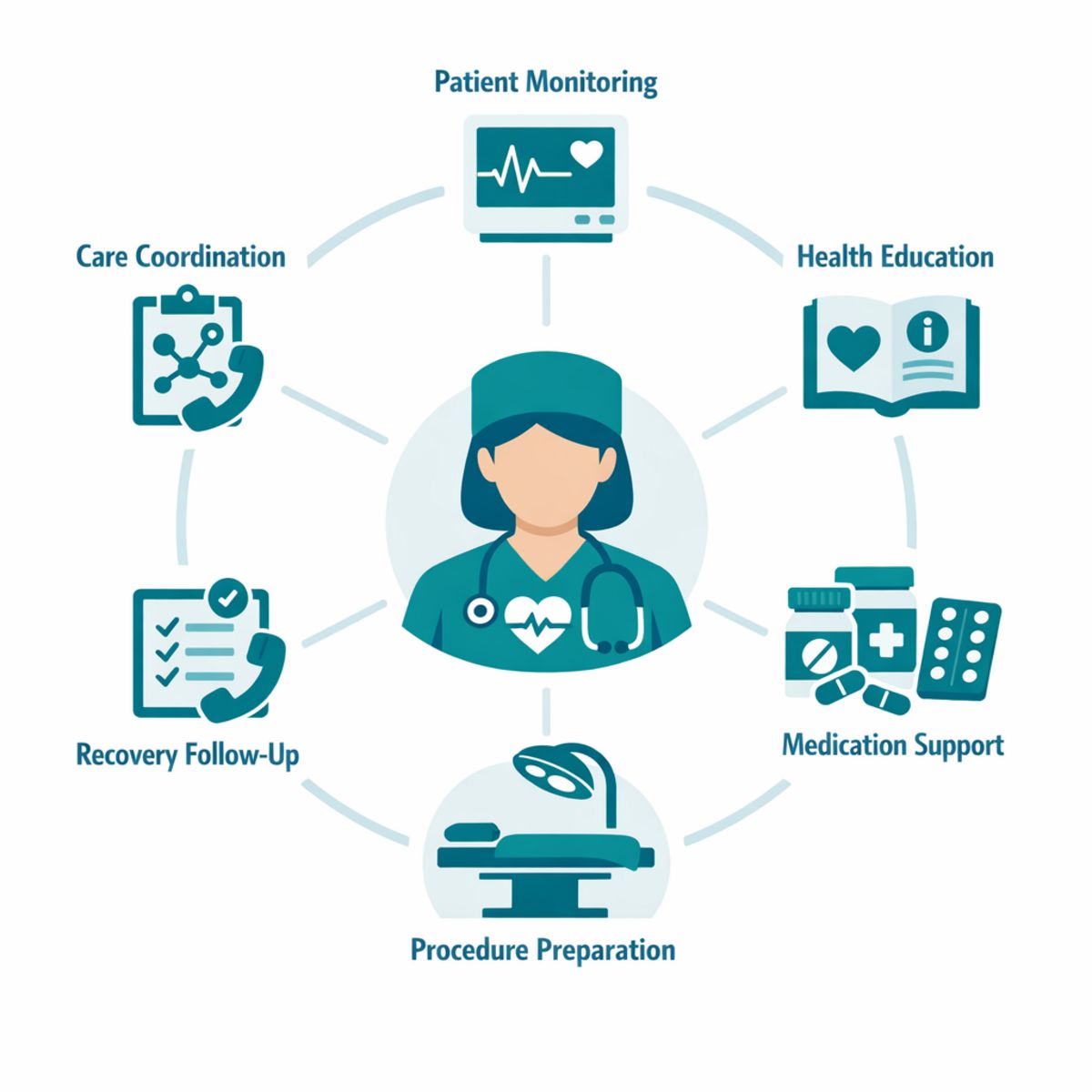
Their work often includes monitoring symptoms, checking vital signs, helping patients understand medications, preparing them for tests or procedures, and supporting recovery at home or in follow-up care. They also help patients learn what changes to watch for and when to report concerns to a medical professional. Because heart care can involve several providers, cardiac nurses often play an important role in communication and care coordination.
Some cardiac nurses may also work with patients who have heart rhythm concerns. In those cases, terms like the cardiac conduction system and cardiac electrophysiology may come up, especially when a care team is evaluating how the heart’s electrical signals affect heartbeat patterns. These are specialized areas, but a cardiac nurse can help explain instructions and support the patient experience in plain language.
How cardiac nurses fit into the care team
Cardiac nurses are part of a broader heart care team and often work closely with cardiologists, primary care providers, hospital staff, technicians, and rehabilitation professionals. While physicians diagnose conditions and direct treatment plans, nurses help carry out day-to-day care, observe changes, and keep patients informed. They may also help families understand next steps and connect patients with other services when needed.
In many cases, they also help patients understand where different providers fit into care. For example, learning more about what general physicians do in care can make it easier to see how heart care connects with overall health support.
Types of heart-related concerns they may support
A cardiac nurse may support people with a wide range of needs, depending on physician evaluation and the care setting. This can include rhythm concerns, recovery after procedures, chronic heart conditions, medication teaching, and lifestyle education related to heart health. They may also help patients prepare for appointments, understand discharge instructions, and follow recovery plans more confidently.
Overall, cardiac nursing is about combining clinical observation, patient education, and practical support so people with heart concerns can better understand their care and navigate treatment with the right team around them.
Why Cardiac Nurses Matter in Patient Care

Cardiac nurses play an important role in helping patients feel supported, informed, and more prepared throughout heart care. Their work often goes beyond taking vital signs or assisting during visits. They may help explain care plans in plain language, reinforce what a physician has recommended, and make sure patients understand the next steps after an appointment, test, or procedure. This kind of patient education can be especially valuable when information feels overwhelming.
In daily practice, cardiac nurses often monitor for changes that may need attention, encourage follow-up, and review instructions related to medications, activity, diet, and recovery. They may also help patients understand what symptoms to watch for at home and when to contact a medical professional. For some patients, including older adults or people managing several health needs at once, that extra layer of guidance can make heart care feel more organized and easier to follow.
Education that helps patients feel more prepared
A major benefit of working with a cardiac nurse is practical education. Instead of repeating medical terms, they often help translate instructions into everyday actions: when to take medication, how to track blood pressure or symptoms, what questions to bring to the next appointment, and what recovery steps matter most. They may also help patients prepare for conversations with their care team so they can ask clearer questions and better understand their options.
Support across appointments, procedures, and recovery
Continuity of care is another reason cardiac nurses matter. Support may begin before a procedure, continue through discharge, and extend into recovery and follow-up. Nurses can reinforce discharge instructions, encourage symptom tracking, and remind patients why follow-up visits are important. When patients need added flexibility for ongoing communication, Telemedicine visits for follow-up questions may also be a useful option as part of broader care coordination.
Overall, cardiac nurses help strengthen safety, understanding, and continuity in patient care. Their support can improve the day-to-day experience of managing heart health by making instructions clearer, recovery guidance more practical, and follow-up steps easier to navigate.
Where Cardiac Nurses Work and What They Do Day to Day

Cardiac nurses work across many points in the patient journey, from hospital-based care to outpatient follow-up. Their day-to-day responsibilities often include checking vital signs, reviewing symptoms, documenting changes, educating patients, and communicating updates to physicians and other members of the care team. The exact scope varies by credentials, employer, and patient needs, so responsibilities may look different from one setting to another.
Hospital, clinic, and rehabilitation settings
In hospitals, cardiac nurses may work on telemetry floors, step-down units, intensive care areas, emergency departments, or cardiac units where patients need close monitoring. In these settings, they may track heart rhythm changes, assess pain or shortness of breath, administer ordered treatments, watch for signs of recovery or decline, and help coordinate next steps in care. Some also support patients in catheterization labs or procedure areas, where teamwork and careful observation are especially important.
In outpatient clinics, responsibilities often center on scheduled visits, symptom review, medication discussions, patient education, and follow-up planning. In cardiac rehabilitation programs, nurses may help monitor patients as they build endurance, reinforce lifestyle guidance, and watch for symptoms during supervised recovery. These roles are patient-centered but differ from acute hospital care, where needs can change more quickly.
Before, during, and after cardiac procedures
Cardiac nurses may support patients before, during, and after cardiac procedures in general ways. Before a procedure, they may review symptoms, confirm preparation steps, answer basic questions, and help patients feel more informed about what to expect. During testing or treatment, they may assist with monitoring, documentation, and patient comfort while working alongside physicians and other clinicians.
Examples can include support related to stress testing, rhythm monitoring, catheter-based procedures, and post-procedure observation. Afterward, nurses often monitor recovery, check vital signs, watch for changes that need attention, and reinforce discharge instructions. They may also explain when to seek urgent care, schedule follow-up, and help patients understand the next phase of recovery.
Home-based and virtual follow-up support
Some follow-up support may happen outside the hospital, depending on the condition and care plan. In certain cases, nurses may help with home-based follow-up, symptom check-ins, medication review, or education about monitoring devices. Virtual care support may also be used for selected questions, routine updates, or coordination after a recent visit. This can make follow-up more convenient, but it does not replace in-person evaluation when symptoms are serious or complex.
It is important to understand that not every heart concern can be managed at home or through Telemedicine. Some conditions require hospital evaluation, testing, or specialist care. Overall, cardiac nurses help connect the different stages of care by monitoring patients closely, supporting communication, and helping people navigate treatment and recovery more confidently.
Cardiac Nurse vs. Other Heart Care Roles

Heart care titles can sound similar, so it helps to compare them in simple terms. A cardiac nurse typically focuses on monitoring, hands-on care, patient education, symptom observation, and helping people follow treatment plans. They often support patients before, during, and after testing or treatment, while also communicating changes to the broader care team.
Cardiac nurse vs. cardiologist
A cardiologist is a physician who evaluates heart conditions, makes diagnoses, orders and interprets many cardiac tests, and creates medical treatment plans. A cardiac nurse does not replace that physician role. Instead, the nurse supports care delivery by checking vital signs, watching for changes, reinforcing instructions, and helping patients understand medications, recovery steps, and warning signs. In practical terms, the cardiologist decides on diagnosis and treatment direction, while the cardiac nurse helps carry out and support that plan.
A nurse practitioner in heart care may have a broader clinical scope than a registered nurse, depending on training and state rules. They may assess symptoms, manage some aspects of follow-up care, and work closely with supervising or collaborating physicians. A general physician, such as a primary care doctor, may be the first person to evaluate chest discomfort, blood pressure concerns, or risk factors and then decide whether specialist heart care is needed.
Where cardiac electrophysiology fits in
Cardiac electrophysiology focuses on the heart’s electrical activity and rhythm-related evaluation. An electrophysiology specialist may assess irregular heartbeats, palpitations, or conduction problems and recommend advanced rhythm testing or procedures. In that setting, a cardiac nurse may help with preparation, monitoring, education, and follow-up, but does not replace specialist procedures or emergency services.
If symptoms are severe, sudden, or feel like an emergency, patients should seek urgent medical attention rather than rely on routine nursing guidance alone. For less urgent concerns, the right level of care often depends on symptom severity, prior diagnosis, and physician guidance. Clear role boundaries also support patient trust and medical ethics, helping people understand who does what and when specialist care is appropriate.
How to Know When to Seek Heart-Related Medical Care
If you are worried about heart-related symptoms, the safest approach is to sort them by urgency rather than trying to diagnose yourself online. This section offers a practical framework, but it cannot tell you what is cardiac arrest, what causes cardiac arrest, or whether a specific symptom means a particular condition. Those are medical questions that require professional evaluation. If symptoms seem severe, sudden, or life-threatening, seek emergency care right away.
Step 1: Recognize emergency red flags
Call 911 immediately or go to the nearest emergency room if someone has chest discomfort with severe distress, faints, has severe shortness of breath, suddenly collapses, or is unresponsive. Signs of cardiac arrest and cardiac arrest symptoms can include sudden collapse, no normal breathing, and no response. These are emergencies and should never be watched at home or managed through routine scheduling.
Do not wait to see if these symptoms pass. Emergency services are the right next step for potentially life-threatening symptoms.
Step 2: Choose the right next step for non-emergencies
If symptoms are mild, ongoing, or concerning but not emergent, a physician visit may be appropriate. Examples can include questions about follow-up after a recent visit, medication side effects, or mild symptoms that still deserve medical attention depending on the condition and your health history.
In some non-emergency situations, Telemedicine for non-emergency follow-up may help you decide whether you need an in-person exam, medication review, or a higher level of care. However, some concerns still require hospital testing, urgent evaluation, or specialist care, so remote guidance is not a substitute for emergency treatment.
If you are unsure how urgent a symptom is, err on the side of caution and seek prompt medical advice.
Step 3: Prepare useful information for your visit
To make your appointment more productive, write down when symptoms started, how long they lasted, what you were doing at the time, and whether they are getting better, worse, or staying the same. Bring a list of medications, supplements, allergies, recent diagnoses, and any home readings you have been tracking.
It also helps to prepare a few questions in advance, especially about follow-up care, medication concerns, or what changes should prompt urgent reevaluation.
Understanding the Cardiac Conduction System in Simple Terms
The cardiac conduction system is the heart’s built-in electrical signaling network. In simple terms, it works like a timing system that tells different parts of the heart when to squeeze, helping each heartbeat happen in an organized sequence instead of all at once.
The heart’s electrical system, explained simply
You can think of it like a conductor leading an orchestra. The signal starts, travels through the heart along a set pathway, and helps the upper and lower chambers beat in the right order. That timing is important because it helps the heart move blood efficiently. This is also the basic idea behind cardiac electrophysiology, which focuses on the heart’s electrical activity and rhythm.
Why this matters in real-world care
When rhythm concerns are being evaluated, cardiac nurses may help monitor symptoms, explain what tests are for, and support follow-up care. They often help patients understand tools such as heart monitoring, ECGs, or next-step instructions in a clear and reassuring way. If symptoms feel more immediate, it may also help to understand when urgent care may make sense.
A simple understanding of the cardiac conduction system can make conversations about heart rhythm easier to follow without turning the topic into a technical lesson. The goal is not self-diagnosis, but better understanding and support during care.

Frequently Asked Questions About Cardiac Nurses
Quick answers to common questions
What does a cardiac nurse do every day?
Cardiac nurses monitor heart-related symptoms, check vital signs, give medications as ordered, educate patients, and communicate changes to the care team. Their daily work may also include reviewing test results, supporting recovery, and helping patients understand treatment plans.
Is a cardiac nurse the same as a cardiologist?
No. A cardiac nurse is a licensed nursing professional who provides patient care and education, while a cardiologist is a physician who diagnoses and manages heart conditions and may perform specialized medical procedures.
Do cardiac nurses help with cardiac procedures?
Yes, cardiac nurses may assist before, during, or after certain heart-related procedures depending on the setting and their role. They often help prepare patients, monitor recovery, and watch for changes that need medical attention.
What is cardiac arrest?
Cardiac arrest is when the heart suddenly stops pumping blood effectively. It is a medical emergency and is different from a heart attack, although a heart attack can sometimes lead to cardiac arrest.
What are some signs of cardiac arrest?
Common signs include sudden collapse, unresponsiveness, and not breathing normally or only gasping. If cardiac arrest is suspected, call emergency services right away and begin CPR if you are trained to do so.
Can heart-related concerns be evaluated at home or by Telemedicine?
Some non-emergency concerns, follow-up questions, medication reviews, and symptom discussions may be appropriate for in-home or virtual evaluation. Severe chest pain, fainting, severe shortness of breath, or signs of cardiac arrest require immediate emergency care rather than home or telemedicine assessment.
Does insurance cover in-home or virtual heart-related visits?
Insurance coverage for in-home or virtual visits varies by plan, provider network, location, and the type of service being requested. Appointment availability also varies, so it is best to confirm both coverage and scheduling details directly with the provider and your insurance company.
When to Contact House Call Doctor LA
If you have non-emergency questions, new symptoms that need medical guidance, or follow-up concerns after a recent episode, House Call Doctor LA may help you understand the most appropriate next step. Depending on the condition and physician evaluation, care may involve an in-home physician visit or virtual care through Telemedicine visits.
Some heart-related concerns cannot be safely addressed at home or virtually. Chest pain, severe shortness of breath, fainting, stroke-like symptoms, or other potentially serious symptoms may require emergency evaluation, hospital care, or referral to a specialist. If you believe you may be having a medical emergency, call 911 or go to the nearest emergency room.
For non-emergency situations, contacting the team can help you ask questions about whether an in-home visit or Telemedicine consultation may be appropriate. Insurance coverage varies, so it is important to verify your benefits before scheduling.
Choose the right next step
Final Takeaway
A cardiac nurse plays an important role in heart-related education, monitoring, and care coordination. They help patients understand their care, support communication with the medical team, and contribute to safe, organized treatment planning.
It is also important to remember that symptoms can look different from one person to another, which is why proper medical evaluation matters. While some concerns may be appropriate to discuss with a physician in a non-emergency setting, more serious or sudden symptoms should never be ignored.
The key point to remember
A cardiac nurse supports heart care, but urgent symptoms need prompt medical attention and emergency warning signs require calling 911 or going to the nearest emergency room. Keeping that distinction in mind can help you take the next step with more clarity and confidence.