
A medical group is usually an organization of doctors and other healthcare professionals who work together under one practice structure. People often come across the term medical group when booking a doctor appointment, checking an insurance directory, reviewing paperwork, or requesting medical records. In plain language, it describes how care is organized, not a diagnosis and not a promise that every service will be available in every setting.
That matters because care options can look different from one provider setup to another. Depending on the concern and a physician evaluation, a patient might be guided toward a primary care physician, an urgent care center, telemedicine, or in some cases an in-home doctor visit for non-emergency needs. The right fit depends on the situation, the services offered, and how the practice coordinates care.
This guide gives a simple overview of what the term means, why it appears so often in healthcare communications, and how different care models may affect your choices. The goal is to make the topic easier to understand so you can feel more confident when comparing providers or deciding what kind of appointment to explore next.
Why the term can feel confusing
For many patients, the phrase shows up without much explanation. You may see “medical group” on insurance documents, provider directories, appointment forms, billing statements, or messages from a medical office. Because it can refer to the business and care structure behind your providers, it is easy to mistake it for a specific clinic, specialty, or service line.
What this guide will cover
Below, we will break down common definitions, explain how care models are organized, and outline what to consider when choosing a provider setup. We will also briefly touch on when virtual care or in-home care may be worth asking about for non-emergency concerns.
What Is a Medical Group?
A medical group is an organization of physicians and other healthcare professionals who practice together or coordinate care through one system. Depending on the practice model, a medical group may include primary care, family medicine, an internal medicine doctor, specialists, nurses, and support staff who help patients move through appointments and follow-up care.
For patients, the difference between a medical group and a single doctor’s office is often the shared structure behind the scenes. Instead of one provider working alone, a medical group often brings multiple providers and team members together. That can make it easier to schedule visits, manage referrals, and keep communication more connected across different types of care.
How a medical group is structured
A medical group may be built around several doctors practicing under one name, or it may be part of a larger coordinated care system. Patients may notice one main phone number, one patient portal, one billing process, or several office locations connected through the same organization. Shared scheduling and administrative systems often help the group operate more smoothly, although services can vary from one practice to another.
In many cases, the group includes both clinical and non-clinical teams. Physicians and advanced practice providers deliver care, while office staff support check-in, insurance questions, appointment coordination, and communication between departments.
Common roles patients may interact with
Patients in a medical group may interact with a primary care physician, an internal medicine doctor, nurses, medical assistants, specialists, and a medical receptionist. They may also hear from referral coordinators or care coordinators who help arrange specialist visits, testing, or follow-up steps. Each role supports a different part of the patient experience, from direct treatment to scheduling and communication.
How medical records and coordination may work
One practical benefit of a medical group is that medical records may be shared within the organization’s systems, subject to privacy rules and the tools the practice uses. This can support continuity of care because providers may be able to review visit notes, medications, test results, and referral information more easily. For patients, that often means more coordinated care, fewer repeated explanations, and a clearer path between routine visits and specialty care.

Why Patients Choose a Medical Group
For many people, the appeal of a medical group is not just one provider, but a more connected care experience. Depending on the group’s setup, patients may find it easier to move from a routine doctor appointment to follow-up care, testing, or a referral without repeating the same information at every step. That kind of coordination can be helpful when someone is managing ongoing health concerns, caring for a family member, or simply trying to keep care organized.
At the same time, these advantages are not identical everywhere. Convenience and coordination can vary based on the patient’s needs, insurance coverage, provider availability, and how the medical office or group is structured. A medical group may offer practical benefits, but whether those benefits feel meaningful often depends on the situation and the physician’s evaluation.
Continuity and follow-up
One reason patients choose a medical group is the possibility of better continuity over time. When providers work within a shared system, medical records, visit notes, and care plans may be easier to access across appointments. That can support more informed follow-up conversations and reduce the need to retell the same history repeatedly. It does not guarantee a specific outcome, but it may make ongoing care feel more organized and consistent.
Referrals and coordinated next steps
Patients also often value simpler referrals. If another provider or service is needed, a medical group may help coordinate the next step more efficiently, whether that means primary care, specialty input, imaging, or other support. In some cases, specialist or hospital care may still be necessary depending on the condition, but a coordinated system can make transitions easier to navigate.
Convenience for busy households and caregivers
Convenience is another common factor. Some patients appreciate having access to different provider types and multiple care pathways, such as office visits, telemedicine visits with House Call Doctor LA, or in-home support when available for non-emergency needs. For busy households and caregivers, easier scheduling and communication can make care feel more manageable. Still, the right fit depends on the individual, the services offered, and what level of care is appropriate at that time.
Medical Group vs. Other Care Options

Choosing care often depends on what kind of help you need, how quickly you need it, and whether follow-up matters. A medical group can offer coordinated access to multiple providers, while other options such as a solo physician practice, an urgent care center, virtual care, or in-home doctor visits may fit different situations. The goal is not that one option is always better, but that each may serve a different purpose.
Medical group vs. solo practice
A medical group and a solo practice may both provide strong primary care, but the experience can differ. A medical group often has a broader provider network, shared records, and more built-in coordination across services. That may help when a patient needs scheduling flexibility, follow-up with another clinician, or support from more than one type of provider, such as a primary care physician and an internal medicine doctor.
A solo practice may appeal to patients who prefer a smaller setting and a long-standing relationship with one physician. In many cases, continuity can be excellent in either model. The best fit often comes down to personal preference, appointment availability, and how important broader provider access is for your care needs.
Medical group vs. urgent care center
An urgent care center is generally designed for non-emergency, time-sensitive concerns when you need prompt attention and cannot wait for a routine appointment. A medical group, by contrast, is often better suited for ongoing care relationships, preventive care, medication management, and follow-up over time.
- A medical group may be a better fit for long-term care planning and coordination.
- An urgent care center may be useful for certain non-emergency issues that need same-day attention.
- Neither replaces emergency care for severe or life-threatening symptoms.
In-home visits vs. telemedicine
In-home care means a physician comes to the patient. Telemedicine is virtual care, usually by video or phone. Both can improve access, but they are not the same. An in-home visit may be helpful when being physically present supports evaluation in the home setting. Telemedicine can be convenient for discussing symptoms, follow-up questions, or care guidance when an in-person setting is not necessary.
Virtual care also has limits, since some concerns require a hands-on exam, testing, office-based treatment, specialist evaluation, or hospital care. Likewise, in-home visits may not be appropriate for every condition. If you want to learn more about telemedicine visits with House Call Doctor LA, it can help to compare convenience with the need for in-person assessment.
If symptoms are severe, rapidly worsening, or potentially life-threatening, call 911 or go to the nearest emergency room right away. This comparison is meant to support informed care selection, not to diagnose or determine emergency treatment needs.
How to Choose the Right Medical Group for Your Needs
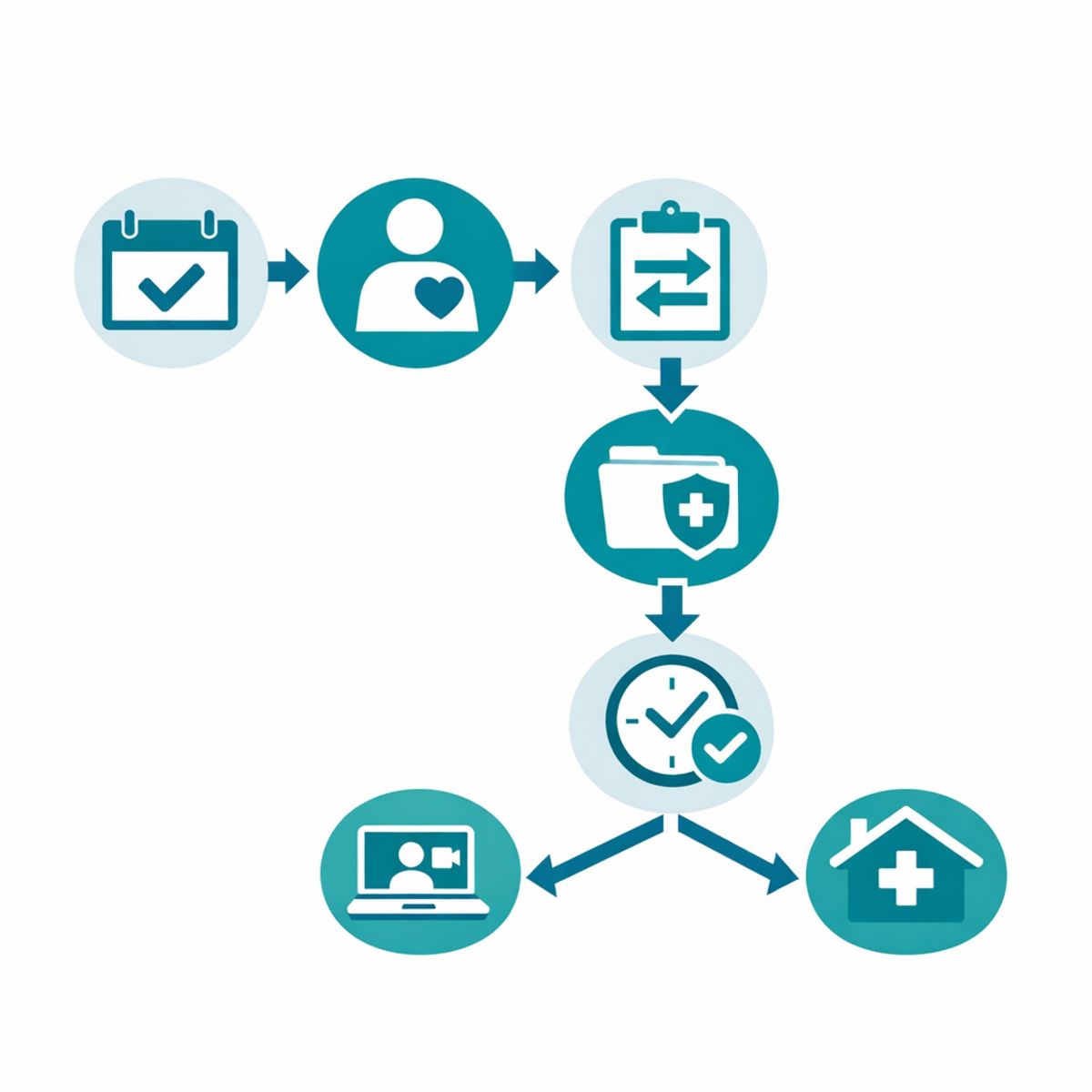
Choosing a medical group is easier when you compare your care needs with the services, access options, and support systems a practice offers. Instead of focusing on one feature alone, look at the full experience: the types of providers available, how the doctor appointment process works, whether follow-up is clear, and what care formats may be appropriate for your situation. If you are still learning about what a medical doctor does, that can also help you decide what kind of practice is the best fit.
Step 1: Match the group to your care needs
Start by identifying what you need most often. Some people want ongoing primary care for preventive visits and long-term health management. Others may mainly need occasional non-emergency support, follow-up after a recent illness, or access to more than one care format. If you expect regular check-ins, ask whether the group has family medicine or internal medicine doctor availability that fits your age, health history, and preferences. If your needs are broader, look for a medical group that can coordinate routine care, referrals, and follow-up without making the process feel fragmented.
Step 2: Review access and appointment options
Next, review how easy it is to access care. Ask how scheduling works, how far in advance doctor appointments are typically booked, and whether communication happens by phone, portal, or another secure method. If flexibility matters to you, ask whether office visits, telemedicine, or in-home care are offered for appropriate non-emergency situations. These options vary by practice, condition, and physician evaluation, so it is important to confirm what is actually available rather than assume every format applies to every concern. A strong medical group should also explain what happens if you need follow-up questions answered after your visit.
Step 3: Verify insurance, records, and referrals
Before scheduling, confirm the practical details that often affect your experience the most. Ask these questions:
- Does the group accept your insurance plan, and are there any likely out-of-pocket costs you should expect? Coverage varies, so verify directly before booking.
- How can you access medical records, test results, and visit summaries?
- What is the referral process if you need specialty care or additional evaluation?
- How does the practice handle follow-up after a visit or treatment plan change?
- Are telemedicine or in-home visits available when clinically appropriate, or only in limited situations?
A good final test is whether the medical group gives clear, realistic answers. Appointment availability is not guaranteed, insurance details can change, and care format depends on the patient’s condition and physician judgment. When a practice communicates those limits clearly while still making the process understandable, that is often a sign you are choosing a group that supports informed, practical decision-making.

When a Mobile Doctor May Help Within a Broader Care Plan
For some patients, receiving care at home may help when travel is difficult, rest is important, or coordinating transportation adds stress to an already challenging day. In a broader care plan, an in-home physician visit can sometimes offer a practical option for non-emergency concerns, follow-up needs, or an in-person evaluation request, depending on your condition and the physician’s assessment.
This can be especially relevant when a patient benefits from being assessed in their home environment, or when a caregiver wants added support in understanding next steps. In some situations, families exploring home respite care and medical house calls may find that an in-home visit fits alongside other services rather than replacing them. The goal is not to substitute for every clinic appointment or hospital resource, but to help determine what level of care may be appropriate.
Situations where in-home care may be worth considering
A mobile doctor may be worth considering for certain non-emergency situations, such as when someone needs an in-person medical review, has mobility limitations, is recovering and prefers to rest at home, or would benefit from caregiver participation during the visit. Unlike telemedicine, an in-home physician visit allows the doctor to assess the patient face to face in the home setting, which may help with evaluation and care planning in selected cases.
Important limits of in-home care
At the same time, some conditions cannot be fully managed at home. Depending on symptoms and severity, a patient may need hospital-level monitoring, imaging, lab access, specialist treatment, or emergency intervention. Severe chest pain, trouble breathing, signs of stroke, major injury, uncontrolled bleeding, or any life-threatening emergency should be treated as emergencies—call 911 or go to the nearest emergency room right away. In-home care may help in the right non-emergency context, but it does not replace emergency or hospital care when those services are needed.

Frequently Asked Questions About Medical Groups
What is the difference between a medical group and a hospital?
A medical group generally organizes outpatient physicians and other clinicians who provide coordinated care in office-based settings. A hospital is a facility that provides broader services such as emergency care, surgery, imaging, and inpatient treatment. The two may work closely together, but they are not the same thing.
Can a medical group include both primary care and specialty care?
Yes, many medical groups include both primary care and specialty care, which can make referrals and follow-up more connected. That said, the mix of services varies by organization. Some groups focus on a narrower set of services, while others offer a wider network of physicians and care options.
How do medical records usually work in a medical group?
In many cases, records can be shared within the medical group’s systems so different clinicians can review relevant history, test results, and treatment plans. This can support continuity of care. However, record access, workflows, and patient processes vary depending on the practice setup and the services involved.
Is an urgent care center the same as a medical group?
No. Urgent care is a care setting designed for certain non-emergency health concerns that need prompt attention. A medical group is an organizational model for physicians and related services. Some medical groups may include urgent care locations, while others may not offer that type of care at all.
Can I use telemedicine or in-home care instead of going to an office?
Sometimes, but it depends on the concern, the physician’s evaluation, and what services are available. Telemedicine or in-home care may be appropriate for some needs, while other situations still require an office visit, specialist evaluation, hospital-based care, or emergency treatment. If symptoms seem severe or urgent, emergency care should not be delayed.
Need Non-Emergency Care Support? Explore Your Options
If you need help with a non-emergency health concern, contact the team to ask about in-home physician visits or telemedicine visits with House Call Doctor LA. Availability, coverage, and clinical suitability can vary based on your needs and location. For emergencies, call 911 or go to the nearest emergency room.
Contact the team
Choosing Care With More Confidence
A medical group is a coordinated care model that can make it easier to manage appointments, records, and follow-up across providers. Before booking, compare provider access, insurance coverage, record sharing, and available care formats. The best choice depends on your health needs, preferences, and the clinical situation.