
Home respite care is short-term support provided at home so a primary caregiver can take a break while a loved one continues to receive help in a familiar setting. For many families, that break is not a luxury. It can make room for rest, work, travel, errands, or important appointments, while also helping the person receiving care stay comfortable and supported.
This article is designed as practical guidance for families comparing options. It focuses on non-medical respite in clear, simple language, while recognizing that services can look different from one provider to another and may change based on a person’s daily needs, routines, and preferences. Some respite arrangements center on companionship and supervision, while others may include help with personal care or household tasks.
You will also find a straightforward overview of common services, typical cost considerations, how to evaluate providers, and when added medical support may be worth exploring. In some situations, a physician evaluation, telemedicine visit, or higher-acuity care may be more appropriate depending on the condition and the level of support needed.
What this guide covers
Below, we explain what home respite care usually includes, what it may not include, how families often compare costs, what to ask when choosing a provider, and how to recognize when non-medical help may need to be paired with medical guidance.
What Home Respite Care Means
Home respite care is temporary in-home support that gives an unpaid caregiver a break while helping the person receiving care stay safe, comfortable, and supported at home. In plain English, it is short-term help, not a permanent replacement for a family caregiver and not the same as full medical treatment.
In home respite care can take several forms depending on a family’s needs. It may mean a few hours of supervision during the day, help with evening routines, overnight support, or short-term recurring visits during a busy week. The goal is to create reliable coverage so a caregiver can rest, work, attend appointments, or handle other responsibilities without leaving a loved one alone or unsupported.
Short-term support for caregivers
A key difference between respite care and broader home care services is duration and purpose. Respite care is centered on relief for the caregiver. It is usually scheduled for limited periods, such as a few hours, certain evenings, weekends, or overnight stays. Ongoing home care, by contrast, may be arranged as a longer-term care plan with regular weekly or daily support over time.
That means respite can be part of a larger support plan, but it is defined by its temporary nature. Families often use it during recovery periods, travel, work demands, or simply to prevent caregiver burnout.
Non-medical care versus medical care
Home respite care is often provided as non medical home care. This may include companionship, meal help, reminders, mobility assistance, supervision, and personal care support such as help with bathing, dressing, or routines. These services can make daily life easier and safer, but they are different from diagnosis, treatment decisions, or skilled clinical care.
If someone has medical needs that require assessment, treatment, or monitoring by licensed professionals, families may also need skilled nursing, a physician evaluation, or other clinician-led services. Respite care can support comfort and continuity at home, but it should not be viewed as a substitute for medical care when medical oversight is needed.
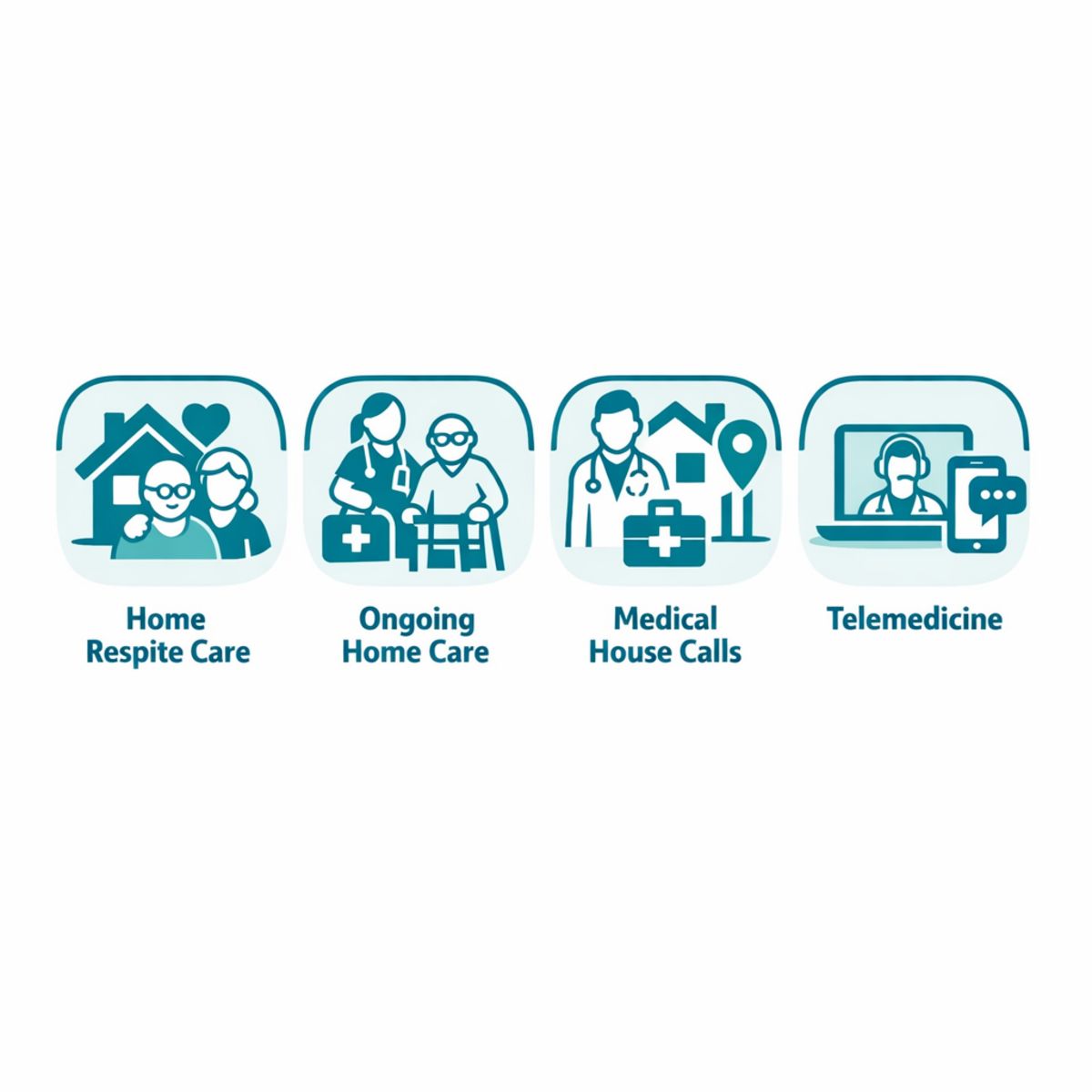
Who Benefits From In-Home Respite Care

In-home respite care can be valuable for both family caregivers and the person receiving support. In practical terms, it creates breathing room in the day while helping care continue in a familiar home setting. The exact benefits depend on the individual, the type of help needed, and the approach used by home care providers, but many families look to respite when regular caregiving starts to affect work, appointments, or day-to-day scheduling.
Benefits for family caregivers
For caregivers, one of the biggest advantages is time. A planned respite visit may allow someone to attend their own medical appointment, go to work, run errands, or simply rest without trying to coordinate every detail alone. That can reduce scheduling strain and make transitions easier during busy periods, such as after a hospital discharge, during a change in routines, or when a loved one needs more consistent supervision or personal care. Respite can also help families share responsibilities more sustainably, especially when caregiving has become a daily commitment rather than an occasional task.
Benefits for the person receiving care
For the person receiving care, staying at home may offer comfort because the environment, routines, and belongings are already familiar. Depending on the situation, respite support may include companionship, help with daily activities, or assistance that fits alongside broader senior care services. This can be useful for older adults, people recovering from illness, or individuals who need supervision or hands-on help at certain times of day. Some families also pair in-home support with telemedicine visits for follow-up questions when appropriate.
Overall, respite is less about making broad promises and more about creating practical support that fits real life. Benefits vary by patient and provider, but for many households, in-home respite care offers a flexible way to support routines, reduce pressure on family caregivers, and maintain continuity in the home.
What Services Are Commonly Included
Respite support is usually designed to give family caregivers practical relief while helping a loved one stay safe, comfortable, and supported at home. The exact scope can vary between in home care agencies, based on agency policies, caregiver training, and the individual’s needs. In general, families can expect non-medical home care services that focus on day-to-day assistance rather than diagnosis or intensive treatment.
Typical respite tasks at home
- Companionship and social engagement to reduce isolation and provide reassurance.
- General supervision for safety, especially when a family caregiver needs time away.
- Meal preparation, hydration reminders, and help with simple daily routines.
- Light routine support such as tidying the immediate care area or assisting with basic household tasks tied to the client’s comfort.
- Mobility assistance, including help with walking, transfers, or moving safely around the home when appropriate.
- Medication reminders, if offered by the provider, though this is not the same as medical management or prescribing.
- Personal care such as bathing, grooming, toileting, or dressing assistance when appropriate and included in the care plan.
What may not be included
Standard respite care is not always equipped to handle skilled nursing tasks, specialist treatment, or conditions that need close medical monitoring. Some situations may require licensed medical care, hospital evaluation, or urgent assessment rather than routine support at home. That is why families should ask providers to explain service boundaries clearly before care begins.
- Advanced medical procedures may fall outside standard respite support.
- New or worsening symptoms should be reviewed by a qualified clinician instead of being assumed manageable through non-medical care alone.
- If questions come up about next steps, telemedicine care when symptoms need review or a physician house call may help determine what level of care is appropriate, depending on the condition.
For any life-threatening emergency, call 911 or go to the nearest emergency room right away. Respite and personal care services can be valuable, but they are only one part of a broader support plan when medical concerns are involved.
Home Respite Care vs Other At-Home Care Options
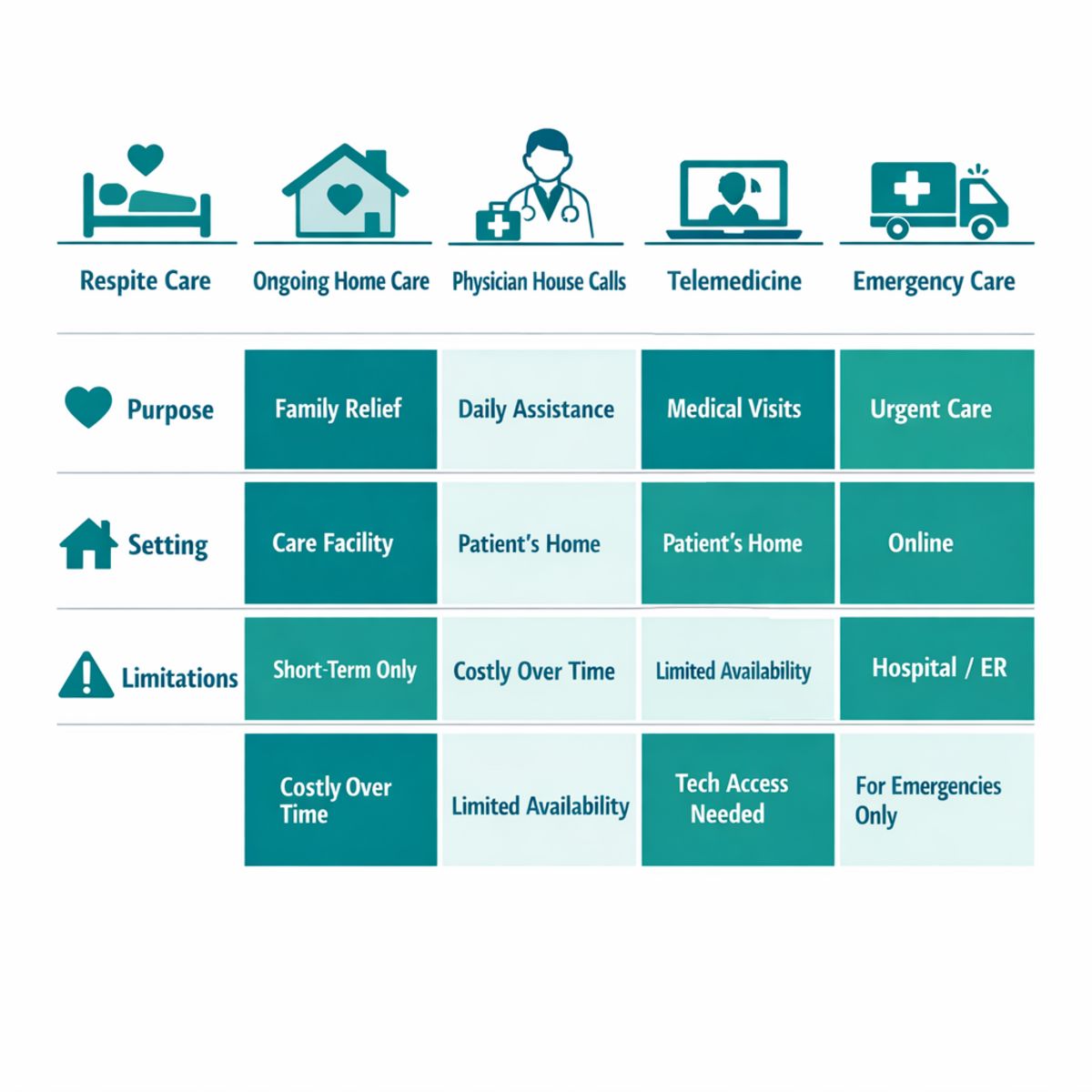
When families compare at-home support, the biggest source of confusion is that several services may happen in the home but serve very different purposes. Respite care is designed to give a family caregiver temporary relief. It supports the patient during a short window so the usual caregiver can rest, work, travel, or handle other responsibilities. That is different from ongoing non medical home care, which is typically scheduled on a recurring basis to help with daily routines over a longer period.
Respite care vs ongoing home care
A simple way to think about it is purpose and duration. Respite care is usually temporary and centered on caregiver relief. Ongoing home care is often part of a longer-term support plan. Many home care providers offer help with companionship, meal preparation, mobility assistance, reminders, and other non-clinical tasks. Those senior care services may be scheduled daily or weekly, while respite care may be used for a few hours, a weekend, or another limited period when the primary caregiver needs coverage.
Home health or skilled nursing is another separate category. These services involve medical needs and licensed clinical care, not just caregiver backup. If someone needs wound care, medication management by a nurse, rehabilitation support, or other skilled treatment, that falls outside the usual role of respite support.
Respite care vs medical care at home
Medical care at home fits in when the patient needs evaluation, diagnosis, or treatment planning rather than only supervision or daily living support. A physician house call may be appropriate when someone needs in-home medical attention for a non-emergency concern, subject to physician assessment. Telemedicine may also help in certain situations, especially for follow-up, symptom review, or initial guidance through virtual care options through telemedicine visits.
Neither telemedicine nor house calls should be viewed as a replacement for emergency services. If symptoms are severe, sudden, or potentially life-threatening, emergency care may be the right setting. In short: respite care supports the caregiver, ongoing home care supports daily routines, and medical house calls or telemedicine support clinical decision-making when medical attention is needed.
How Much Home Respite Care May Cost
Home respite care costs may vary based on the type of support needed, how long care is provided, and who delivers the service. Rather than expecting one standard rate, it is more accurate to think of pricing as depending on the care plan, provider qualifications, scheduling needs, and any available coverage. This helps families set realistic expectations without assuming that every service is billed the same way.
What affects the price
Several factors can influence what you may pay. The total number of hours is often one of the biggest variables, especially if care is needed regularly, for extended shifts, or overnight. The level of assistance also matters. Support with companionship or supervision may be priced differently from care that involves mobility help, personal care, or more complex needs. Scheduling can affect cost as well, since evenings, weekends, short-notice requests, or overnight coverage may be billed differently than standard daytime visits.
Provider type is another important factor. Rates may differ depending on whether services are delivered by a non-medical caregiver, a licensed professional, or a clinical provider. Local market conditions can also play a role, so costs may vary from one provider to another even for similar services.
Insurance and payment questions to ask
Some families pay privately for respite care, while others may receive partial support through certain programs or health plans, depending on eligibility and coverage. Insurance coverage varies, so it is important to verify benefits before scheduling. Ask whether respite care is covered, whether preauthorization is required, what out-of-pocket costs may apply, and whether there are limits on hours, provider types, or visit frequency.
It is also helpful to ask how different services are billed. Non-medical respite care may be handled differently from medical house calls or telemedicine visits, which can follow separate billing rules and coverage terms. Confirming these details in advance can help avoid surprises and make it easier to compare options that fit your family’s needs and budget.
How to Choose the Right Home Care Provider

Choosing between home care providers can feel easier when you use a simple checklist. The goal is to match the provider’s services to the kind of help a person actually needs, while also understanding how the agency communicates, schedules visits, and responds if needs change over time. This step-by-step approach can help families compare in home care agencies more confidently without assuming every provider offers the same level of support.
Step 1: Identify the kind of support needed
Start by defining the day-to-day help required. Some people mainly need companionship, reminders, and supervision. Others may need hands-on personal care such as bathing, dressing, mobility assistance, meal help, or overnight support. It also helps to note whether concerns are mostly routine or whether there are medical questions that may need coordination with a clinician. Being specific about needs makes it easier to evaluate fit and avoid paying for services that are not relevant.
Step 2: Ask the right provider questions
When comparing providers, ask practical questions such as:
- What services are included, and what is excluded?
- What caregiver training is required for personal care and safety tasks?
- How does the agency communicate with families about updates or concerns?
- Is backup coverage available if a caregiver is unavailable?
- How do scheduling, cancellations, minimum hours, and billing work?
- How does the provider respond if the person’s condition changes?
A strong provider should be able to explain when a family may want added medical input, such as physician evaluation, telemedicine support if concerns come up, urgent care, or emergency services depending on the situation.
Step 3: Reassess after care begins
The first few visits often reveal what is working and what should change. After care starts, review whether the schedule is appropriate, whether the caregiver’s approach matches the household’s preferences, and whether the level of support still fits current needs. Families may decide to increase supervision, adjust visit times, or clarify tasks as routines become more established. Ongoing communication can help keep the care plan practical, flexible, and aligned with the person’s comfort and safety.
Using this framework can make it easier to compare in home care agencies with clear expectations. By focusing on scope, training, communication, scheduling, and follow-up, families can make a more informed decision and recognize when non-medical support may need to be coordinated with medical guidance.
When Medical House Calls or Telemedicine May Help Alongside Respite Care

Respite care can provide valuable support with daily living and caregiver relief, but it is not a substitute for medical evaluation. In some non-emergency situations, it may be helpful to consider added medical support depending on the person’s condition, symptoms, and overall needs. Examples may include new but non-urgent health concerns, questions about medications, changes in comfort, or uncertainty about whether an in-person medical evaluation is appropriate.
How physician house calls fit in
A physician house call means the doctor comes to the patient’s home to assess concerns in person. This can help when leaving home is difficult or when a hands-on evaluation may be more appropriate than a virtual conversation. The role of a house call is distinct from respite care: respite services focus on support and supervision, while the physician evaluates medical concerns and determines next steps based on clinical judgment. Any recommendations, treatment planning, or follow-up depend on the physician’s assessment and the situation at hand.
How telemedicine fits in
Telemedicine involves virtual care by video or phone and may be useful for certain non-emergency questions, symptom check-ins, or guidance about whether further evaluation is needed. For some families, telemedicine visits for non-emergency guidance can be a practical first step. However, telemedicine is not right for every situation, and some concerns may still require an in-person visit or hospital-based care. If symptoms appear severe, sudden, or life-threatening, call 911 or go to the nearest emergency room right away.
Frequently Asked Questions About Home Respite Care
Quick answers families often need
What is home respite care?
Home respite care is short-term support provided in the home so a family caregiver can rest, attend appointments, work, or take time away. It typically focuses on supervision, companionship, and help with daily routines rather than diagnosing or treating medical conditions.
How is in home respite care different from regular home care services?
In home respite care is usually temporary and centered on giving the primary caregiver a break. Regular home care may be scheduled as ongoing support for daily living. The exact difference depends on the provider, care plan, visit frequency, and the type of help the client needs.
Does respite care include personal care?
It can, but not always. Some respite providers assist with bathing, dressing, toileting, mobility, meal help, and medication reminders, while others focus on supervision and companionship only. Families should confirm exactly which tasks are included before services begin.
How long can respite care visits last?
Visit length varies by provider and family needs. Some respite visits last a few hours, while others may cover half-day, full-day, overnight, or short recurring schedules. Cost often depends on visit length, time of day, level of assistance, and whether specialized support is required.
Can respite care replace medical care at home?
No. Respite care does not replace emergency care, hospital care, or medical evaluation by a licensed clinician. If someone has chest pain, severe shortness of breath, stroke symptoms, uncontrolled bleeding, or another urgent change, call emergency services right away.
When should a family consider a physician house call or telemedicine visit instead?
Consider a physician house call or telemedicine visit when there are new symptoms, worsening pain, medication concerns, signs of infection, sudden confusion, or a health issue that needs medical judgment. Respite care supports daily living, but medical decisions should be handled by qualified clinicians.
Need Medical Support at Home? Know Your Next Step
If you are coordinating care at home and want to understand whether an in-home physician visit or telemedicine appointments for appropriate concerns may be a fit, House Call Doctor LA can help you explore your next step. Services depend on the patient’s condition and a physician’s evaluation, so it is important to discuss current symptoms, care needs, and timing when you reach out.
You can also ask about scheduling options and verify insurance coverage before making plans. This can help you decide which type of appointment may be most appropriate for your situation without assuming availability or a specific outcome.
Call or contact the team
Request an appointment or contact the team to learn more about in-home physician visits and telemedicine options. For life-threatening emergencies, call 911 or go to the nearest emergency room.
Final Thoughts on Home Respite Care
A practical way to plan support at home
Home respite care can be a practical way to give family caregivers a break while helping a loved one stay comfortable in familiar surroundings. It is often most helpful as short-term support, especially when families need time to rest, manage schedules, or plan next steps with more confidence.
It is also important to remember that respite services are not the same as medical diagnosis or emergency treatment. Depending on the situation, a person may also need physician evaluation, telemedicine, specialist care, or urgent medical attention. Asking early about what a provider can and cannot do can help set clear expectations.
Before choosing a service, families should ask direct questions about scope of care, costs, scheduling, and how support is coordinated at home. A thoughtful, informed approach can make it easier to find care that feels safe, appropriate, and reassuring for everyone involved.